Myers & company



I learn things experientially.
I guess that’s the silver lining associated with having so many different kinds of health conditions. I have a pretty good understanding of what it’s like to have a brain injury, to have a joint replaced and to get PRP injections.
And now, I can better understand what clients experience when they go through “independent medical examinations.”
I have an open underinsured motorist (UIM) claim. And as part of the process my auto insurance company had scheduled…wait for it…five different examinations. I had my first one on July 9th. It was with a neuro-opthamologist.
(The insurance company paid to video the examination. Lots of plaintiffs’ attorneys pay for videographers. I’ve always thought it was counter-productive. The fact that insurance companies now seem to want to record them reinforces that belief.)
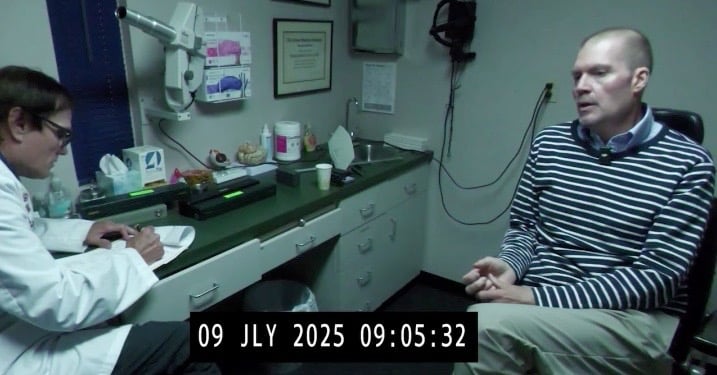
I’ve asked for a lot of money. And I know that the my insurance company has certain operating procedures. But the fact that it scheduled any IMEs (let alone five) frustrated me.
The fact that the insurance company scheduled so many examinations made me feel like it hadn’t been absorbing (or believing) any of the information I’d provided over the past two years.
But with a little bit of time I was able to re-assess. The insurance company scheduled that many examinations because it knows that there’s a significant risk it has to pay a lot of money— maybe even more than the coverage I purchased. That made me feel better.
So I went to my first IME with a positive attitude. Here are some things that stood out:
The examiner was a nice guy. We shared a lot of the same interests. I know in situations like this I should only answer the question that’s being asked. But I really wanted him to understand what I experienced and broke my own rule.
During the examination he explained that the training doctors received in the 1990s about concussions was basically worthless. He learned most of what he knew on the job as the eye doctor for the UW and Seahawks football teams.
Those are interesting reference points. I suspect the response of an 18 year old is probably going to be a lot different than the response of someone who’s 56 years old and has a few miles on him. This was kind of underscored when he later mentioned how many cases of CTE he sees in his former players.
During the examination the doctor shared the symptoms he had that were similar to mine. He also told me that he’d “smashed” his head many times.
I’m not sure whether he did this unintentionally or wanted to normalize what I was experiencing. For a jury in the future. Either way, when he said it I remember thinking (1) that sucks but (2) you didn’t live for 56 years without those problems until you got rear-ended by some dude was looking at his phone.
Despite having read what seems like a thousand IME reports, I left the examination feeling good and, to some extent, like the doctor “got” me. But now that some time has passed realism has set in. The doctor is going to write that my eyes are very healthy and a lot of symptoms (like double vision) resolved within a couple of months.
That’s all true. But the question I suspect the doctor can’t answer is the most important: How come my reading speed and comprehension are so much worse now than before the collision?
I’m going to start sharing this—or some version of it—with clients. It’s natural to have some negative emotions before an IME. But the examination is part of the process when we ask an insurance company to pay us money. The best way to handle an examination is to be cooperative, pleasant and tell the truth.
I’ll let you know how the report reads after I get a copy of it.
Myers & Company
Personal Injury Attorneys
© 2024. All rights reserved.