Myers & company

We’ve all heard that half the damage after a sprained ankle is caused by the swelling. Swelling is a protective inflammatory response. Swelling immobilizes the joint and increases blood flow. But swelling can cause tissue damage, impair healing, and contribute to long-term problems. That’s why it’s so important to ice as soon as possible.
It’s not surprising that “swelling” in the brain (neuroinflammation) plays a significant role after a concussion. It impacts both injury progression and recovery.
We used to think about concussions as a single event.. Now we know that the initial insult to the brain is just the catalyst that sets a much larger process in motion.
Doctors use the terms "primary" and "secondary injury mechanisms". The primary injury mechanism is the mechanical disruption of brain tissue. The secondary injury mechanism is the complex biochemical cascade that follows. The disruption of brain tissues is the first domino to fall. It starts the chain reaction that causes other dominos to fall.
One of these subsequent dominos is neuroinflammation. Neuroinflammation is joined by an entire crew of metabolic responses to the primary injury.
Some of these secondary actors take a while to get going. They may not start affecting the brain for hours, days or weeks following the initial trauma. But once activated, they exacerbate the primary injury and cause additional neurological damage. And even though both have a big impact, neither the primary injury nor the secondary injury mechanisms are going to show up on an x-ray or CT scan.
It kills me when defense doctors try to exploit their knowledge to trick juries. They’re playing a shell game.
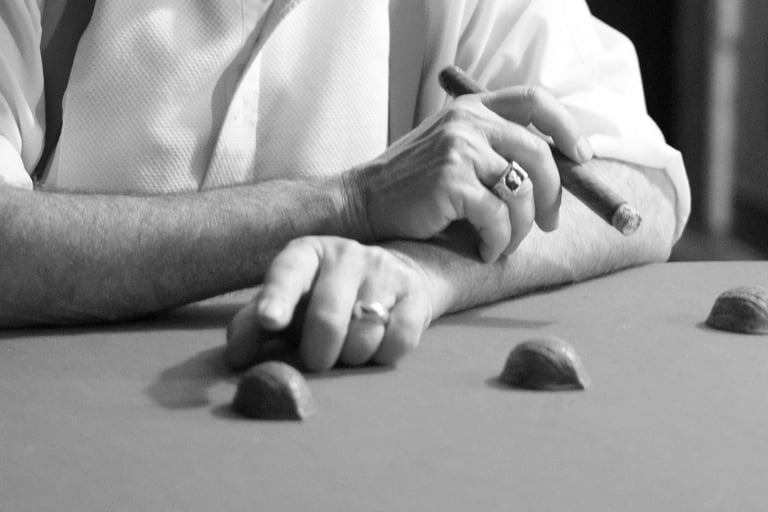

Their whole goal is to make the jurors pick the wrong shell and show there’s nothing there (while at the same time hiding the proof under a different shell).
I’m getting ready for a trial right now. Here are some of the doctor's tricks (and these are typical):
There’s modest damage to the car so there must not have been enough force to cause a brain injury.
In the ER, doctors diagnosed a “closed head injury,” not a “concussion.”
The CT scan shows no structural damage to the brain, so there much not have been an injury.
The injured person reported symptoms days or weeks later that weren’t charted at the Emergency Room.
The injured person suffers from somatic symptom disorder (meaning that their symptoms are real, but caused by their emotional reaction to the collision rather than an actual injury to their brain).
These tricks are straight from the playbook. And they can all be discredited.
For example, the one I’ve underlined—that the collision must not have caused post-concussive symptoms because they were not reported right away—is completely explained by the cascade of secondary actors that cause injury hours, days or weeks after the primary disruption of brain tissue.
Defense doctors hate it when their deception is exposed.
Myers & Company
Personal Injury Attorneys
© 2024. All rights reserved.